


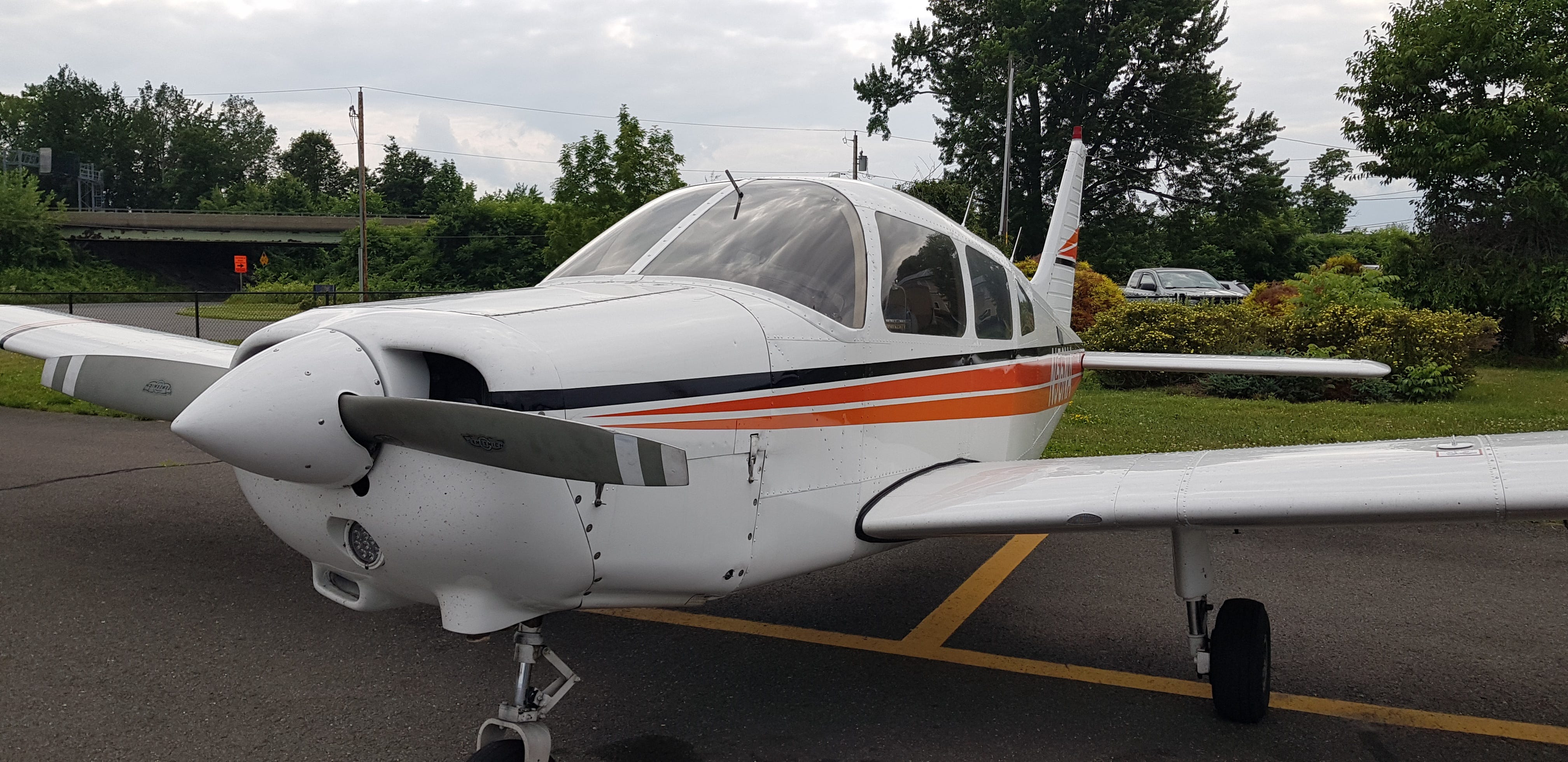
A small airfield in the hills of western Massachusetts: two stories of clapboard, one strip of runway, a windsock that barely stirs. The kind of place that doesn’t announce itself. You notice it only because something small and bright sits parked out front, catching the afternoon.
Inside, the planes wait in a row. They are old — older than anyone here, old enough to have been somebody’s grandfather. You can climb into a cockpit, put your hands on the yoke, and the instruments look back at you like a face from another decade. Nobody minds. Sit as long as you like.
A girl comes over to say hello. I take her for a schoolkid, and I actually ask her where the staff are. She laughs — this is the airport, she's worked here a year, and next month she turns sixteen, old enough to take one of these up alone for the first time. While she talks, a small plane settles onto the strip and two people step down, light as commuters, one bag between them. That one, she says, nodding. One of our instructors. She's twenty-two.
I stand there doing the arithmetic of it — barely more than children, handed a whole sky and trusted to bring it back down. And a question I've carried for years answers itself, quietly: this is the American dream. Not the money, not the address — a sky, made available to anyone willing to dream it first, and then go and try.
The girl walks me back out past the old planes, already looking past me to the runway. The windsock lifts.
A. Skipper’s Log
“If one advances confidently in the direction of his dreams, and endeavours to live the life which he has imagined, he will meet with a success unexpected in common hours.” — Henry David Thoreau, Walden
A sky never asks where you came from. Only which direction you’re willing to point yourself.